You are remodelling a pre-1980 space
Scraping a textured ceiling, pulling floor tile, sanding joint compound or cutting into a wall cavity are all fibre-release activities. Sampling first costs a fraction of what a mid-project stop costs.
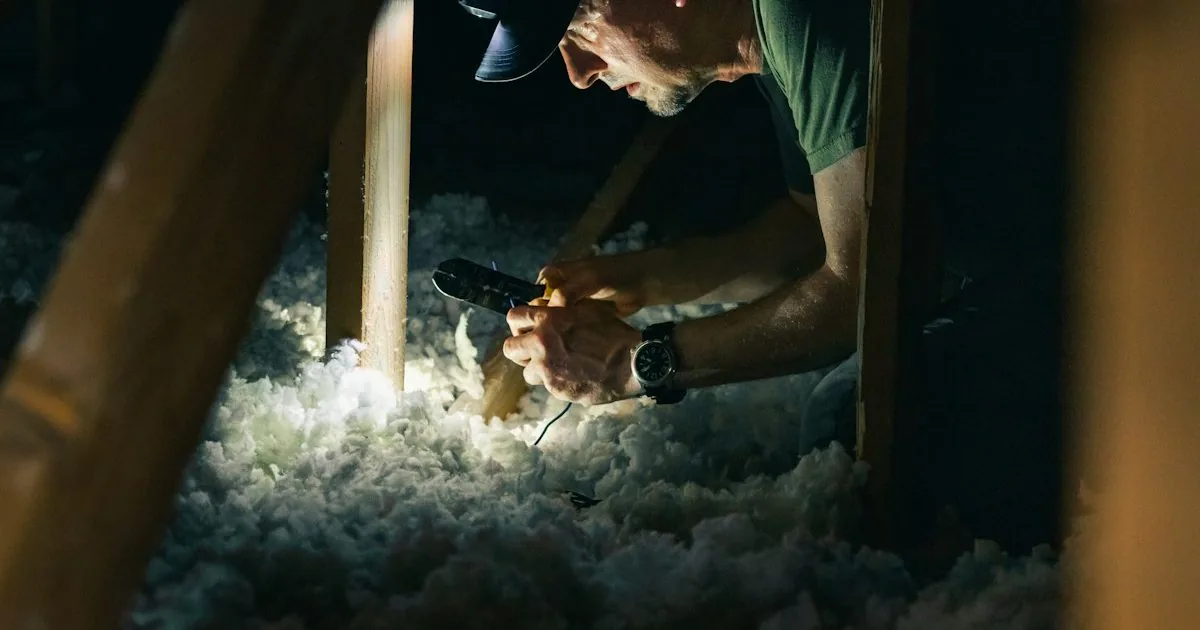
Bulk sampling and accredited laboratory analysis for homes, rentals and commercial buildings across Bismarck and Burleigh County. Survey on site in under an hour, written report in two to three business days.
Asbestos testing in Bismarck costs $200 to $800 for the survey plus $25 to $75 per sample for laboratory analysis, takes under an hour on site, and returns a written report in two to three business days. A certified inspector identifies homogeneous areas of suspect material, collects bulk samples under the minimum counts in 40 CFR 763.86, and sends them to an accredited laboratory for polarised light microscopy. The report names each material, its asbestos content by percent and its fibre type. If you are demolishing, North Dakota DEQ requires that inspection before work begins.
Everything below expands that answer: what triggers a test, what the inspector does, how the laboratory reaches a number, what the report contains, what the state requires, and what happens next if a result comes back positive.
We test and document. We do not sell abatement. The party that finds the asbestos should never be the party quoting you to remove it, and keeping those two roles separate is the single best protection a property owner has.
Asbestos in a building is not automatically a problem. Intact, undisturbed material is generally safer left alone, and the EPA states directly that if building materials in your home are not damaged and will not be disturbed, you do not need to have your home tested. Testing becomes necessary when something is about to change. Six situations account for almost every call we take.
The on-site portion of a residential survey usually takes 30 to 60 minutes. The inspector is doing three things in that window: identifying suspect materials, grouping them into homogeneous areas, and collecting samples in the counts the federal rule requires.
Suspect means any material that could contain asbestos based on its type and its installation date. That is a long list in a pre-1980 building: ceiling texture, floor tile and the adhesive under it, sheet flooring backing, joint compound, pipe and boiler insulation, furnace gaskets, cement siding and roofing, window glazing, and loose-fill vermiculite. The inspector does not guess which of these contain asbestos. Nobody can. The job at this stage is to make sure nothing that could contain it gets left out of the sample plan.
Materials hidden behind finished surfaces matter as much as visible ones. A remodel that involves opening a wall means the original plaster or the original tile underneath the current floor is in scope, even though you cannot see it from the doorway. This is where a survey done by someone who has not read the demolition plan goes wrong.
A homogeneous area is a set of surfaces that are uniform in colour, texture and installation date, meaning they almost certainly came from the same product batch. The ceiling texture in a 1968 living room and the ceiling texture in the adjacent 1984 addition are two homogeneous areas, not one, even if they look similar. Getting this boundary wrong is the most common technical error in a cheap survey, because a sample from one area says nothing about the other.
Sample counts are not a matter of judgement. Federal rule 40 CFR 763.86 sets minimums for surfacing material: at least three samples from a homogeneous area of 1,000 square feet or less, at least five from an area over 1,000 and up to 5,000 square feet, and at least seven from an area larger than 5,000 square feet. That is the 3-5-7 rule. Thermal system insulation has its own requirement of at least three samples per homogeneous area, plus at least one from every patched section under six linear or square feet.
Collection is done wet, into sealed and labelled containers, to prevent fibre release at the moment of sampling. This is exactly the step the EPA warns homeowners away from doing themselves, because if done incorrectly, sampling can be more hazardous than leaving the material alone. Each sampled spot is patched before we leave, so the survey does not create the damage it was meant to assess. The sample testing page goes through counts and homogeneous areas in more detail.
Bulk samples are analysed by polarised light microscopy. A microscopist prepares a portion of the material, examines it under polarised light and identifies asbestos by optical properties that no other fibre shares in combination: refractive index, sign of elongation, extinction angle and birefringence. Those properties distinguish chrysotile from amosite from crocidolite, and distinguish all of them from the fibreglass, cellulose and mineral wool that look identical without a microscope.
The result is reported as a percentage per material. Above one percent, the material meets the federal definition of asbestos-containing material and different handling and disposal rules apply. Below one percent, it does not, though a trace detection still gets reported because it tells you something about the batch.
Air samples are a different method. After an abatement contractor finishes, clearance sampling uses phase contrast microscopy, which counts fibres per cubic centimetre of air inside the containment rather than identifying what those fibres are. PCM answers a different question: is this space safe to reoccupy.

The deliverable is a written laboratory report plus a summary you can hand to a contractor. A verbal opinion is not a deliverable. Here is what is in it.
That last pair of items is the part most reports skip and most projects need. Knowing a pipe wrap is 15 percent chrysotile is only half the answer. Knowing there are 310 linear feet of it, which crosses the 260 linear foot federal threshold, is what tells you a 10-day notification is required before anyone touches it.
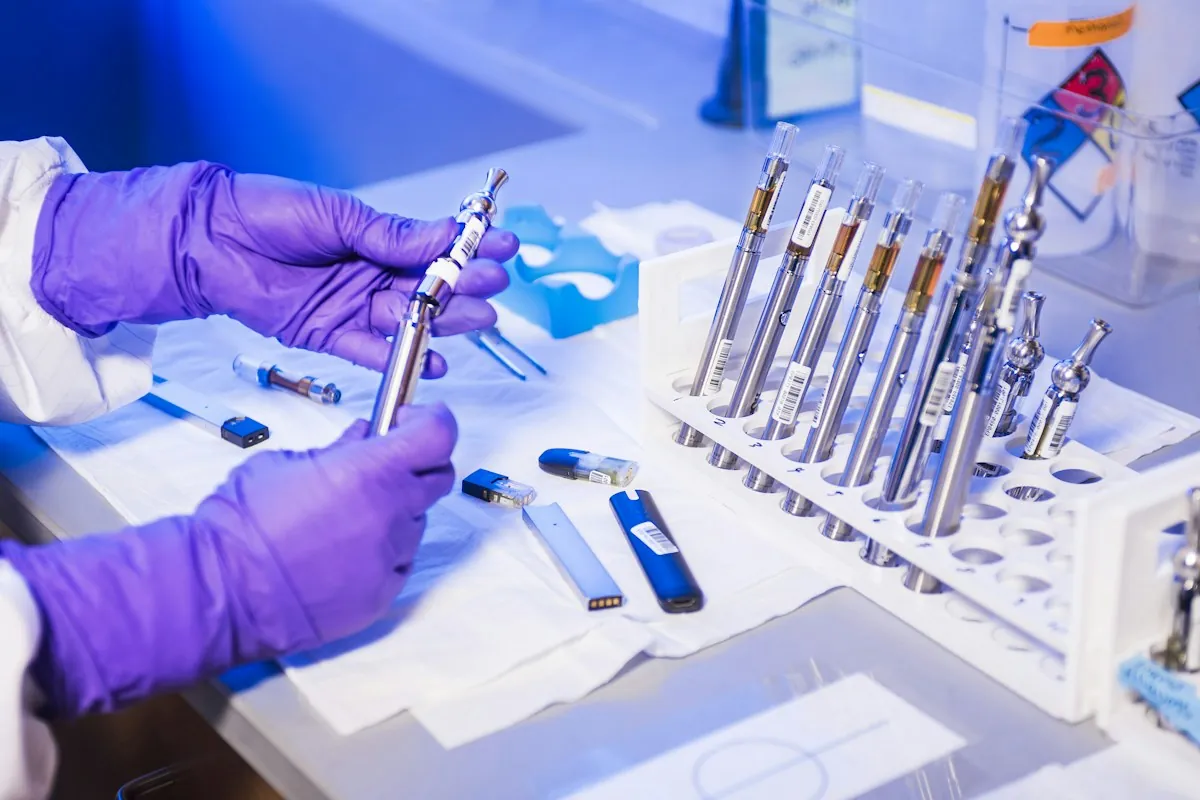
The North Dakota Department of Environmental Quality runs the state Asbestos Control Program under the ND Pollution Control Rules. It licenses abatement contractors, certifies inspectors, supervisors, project designers and air monitors, and enforces the state emission standards for asbestos. As of the most recent published figures, 55 companies hold North Dakota abatement licences and over 600 individuals hold certifications across those disciplines.
Two requirements affect almost every Bismarck project. First, all affected parts of a facility being renovated or demolished must be inspected by a state-certified inspector for the presence of asbestos-containing materials before the project begins. Second, the SFN 17987 Notification of Demolition and Renovation must be submitted at least 10 days prior to any demolition, whether or not asbestos is present.
For renovation rather than demolition, the 10-day notification is triggered by quantity: more than 160 square feet of asbestos-containing surfacing material, or more than 260 linear feet of asbestos-containing thermal system insulation. Those figures come from the federal NESHAP rule at 40 CFR 61.145, which also sets a 35 cubic foot threshold for regulated material off facility components where neither length nor area can be measured. Below those quantities in a demolition, only the notification requirements apply.
The governing state rules are NDCC chapter 23.1-06 and North Dakota Administrative Code 33.1-15-13. The Burleigh County permit page sets out the paperwork sequence in order, including how the city demolition permit and the state notification fit together.
Three things set the price: the number of homogeneous areas, the number of samples that follow from them, and the time on site. A one-room remodel with a textured ceiling, sheet flooring and joint compound is three homogeneous areas and typically five to nine samples. A full pre-demolition survey of a 1,600 square foot home might run 15 to 25 samples across a dozen homogeneous areas.
| Scope | Typical samples | Bismarck range |
|---|---|---|
| Single material check | 3 | $200 to $350 all in |
| Single-room remodel | 5 to 9 | $300 to $550 all in |
| Whole-home survey | 12 to 25 | $500 to $800 plus lab |
| Post-abatement clearance | Air samples | $400 to $1,000 |
Those ranges reflect published Bismarck-area pricing and sit inside the national band, where nationwide surveys report a typical inspection near $485 and per-sample laboratory fees between $20 and $150. The full cost breakdown explains each line and what a positive result means for the downstream abatement budget.
There is a structural conflict of interest when a removal contractor offers a free inspection. Finding asbestos generates the removal contract. Not finding it generates nothing. That does not mean every contractor offering a free inspection is acting in bad faith, but it does mean the incentive points one direction, and you have no way to audit a judgement call about where samples were taken.
A testing-only provider has no removal contract riding on the result. The laboratory report either says the material is above one percent or it does not, and the microscopist has never met you. That is why lenders, insurers and institutional clients routinely require independent testing rather than accepting an abatement contractor's own survey.
If a result comes back positive, you take the report to a North Dakota licensed abatement contractor of your choosing and get competitive quotes against a document everyone is reading the same way. If you want clearance testing after the removal, that comes back to us, which again keeps the crew that did the work from grading its own homework.
US construction use of asbestos was phased down through the late 1970s and into the early 1980s, which is why 1980 works as a practical screening date. Anything built or substantially remodelled before then is worth treating as suspect until a laboratory says otherwise.
Bismarck has a lot of that stock. The Cathedral Area Historic District, the neighbourhood locals call The Hill, was listed on the National Register on 8 May 1980 with 47 contributing buildings across 27.3 acres, and the district was expanded in 1997 and again in 2010. Its architecture is Bungalow and Craftsman, Colonial Revival, Tudor Revival and Foursquare, running roughly along North First, North Mandan, North Washington and North Raymond Streets and Avenues C, D and E West. Every contributing building in that district predates the phase-down by decades.
The same reasoning applies well beyond the historic district, to mid-century ranch housing throughout Bismarck and Mandan, to downtown commercial buildings, and to farmhouses and outbuildings across rural Burleigh and Morton counties where cement panel and pipe wrap are common. Asbestos in pre-1980 Bismarck homes covers the material-by-material picture.
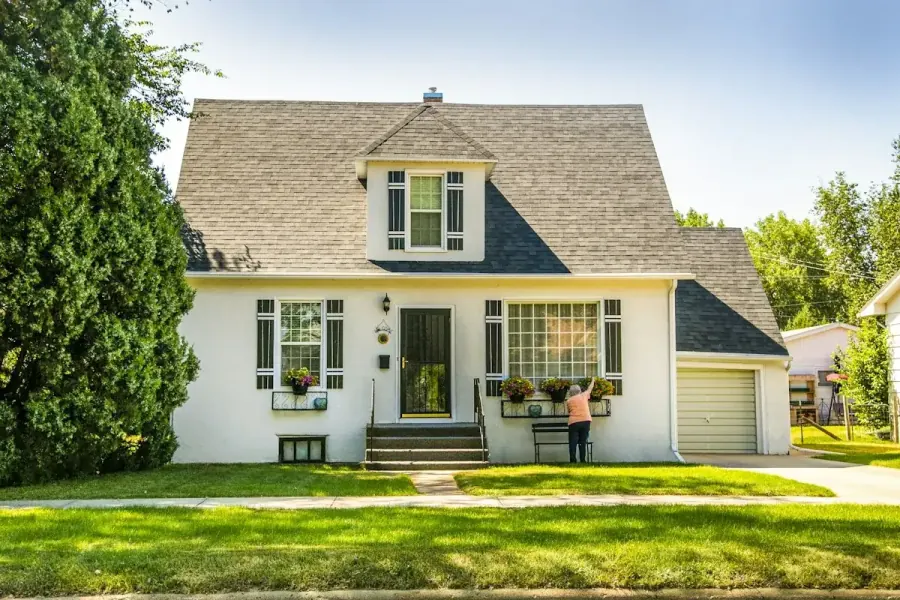
Every regulatory figure on this page comes from one of the following. Where a claim could not be verified against a primary source, it is not on the page.
State program requirements, contractor licensing and certification, SFN 17987 notification timing, and the 160 square foot and 260 linear foot renovation thresholds.
The federal minimum sample counts for surfacing material and thermal system insulation, commonly known as the 3-5-7 rule.
NESHAP inspection requirement and the 260 linear foot, 160 square foot and 35 cubic foot regulated quantity thresholds.
Workplace exposure limits and required controls where asbestos-containing material is disturbed during construction work.
A residential asbestos survey in Bismarck generally runs $200 to $800 depending on the size of the property, plus roughly $25 to $75 per sample for accredited laboratory analysis. A single-material check, one popcorn ceiling or one floor, sits at the bottom of that range. A whole-house pre-demolition survey on a larger pre-1980 property sits at the top. Post-abatement clearance testing is priced separately, usually $400 to $1,000.
Two to three business days is standard. On-site sampling for a typical home takes under an hour. Accredited laboratories quote two to three business days for polarised light microscopy on bulk samples, with 24-hour and same-day rush analysis available at a premium when a demolition crew is on the clock. We confirm the expected report date at the time samples are collected, not after.
Yes. North Dakota DEQ requires that all affected parts of a facility being renovated or demolished be inspected by a state-certified inspector for asbestos-containing materials before the project begins. Separately, the SFN 17987 Notification of Demolition and Renovation must be filed at least 10 days before any demolition, whether or not asbestos is present. Skipping the survey is the most common way a Bismarck demolition gets a stop-work order.
The inspector maps homogeneous areas, meaning building surfaces installed at the same time from the same product, then collects bulk samples from each one using wet methods and sealed containers. Sample counts follow 40 CFR 763.86, which sets minimums of three, five or seven samples per homogeneous area of surfacing material depending on its size. Each sampled location is patched before the inspector leaves.
No, North Dakota does not require asbestos testing as a condition of sale. It becomes relevant when a buyer's home inspector flags suspect material, when a lender or insurer asks, or when the buyer plans a remodel. Many Bismarck transactions on pre-1980 housing get a targeted survey during the inspection period precisely because a written laboratory report removes an unknown from the negotiation.
Testing identifies and documents whether a material contains asbestos. Abatement removes or encapsulates it. They are separate licensed disciplines in North Dakota, and keeping them separate protects you. When the same company that finds the asbestos also quotes the removal, the incentive to find it runs the wrong way. We test and report. If a result comes back positive, you take the report to a licensed abatement contractor of your choosing.
No. The EPA guidance is explicit that you generally cannot tell whether a material contains asbestos simply by looking at it unless it is labeled. Asbestos fibres are microscopic and were blended into ordinary-looking products. Identification requires polarised light microscopy in an accredited laboratory, where a microscopist reads refractive index, extinction angle and birefringence to separate asbestos from fibreglass, cellulose and mineral wool.
A positive result is information, not an emergency. If the material is intact and will not be disturbed, the usual recommendation is to leave it alone and manage it in place. If you are renovating or demolishing, the report tells you the quantity involved, which determines whether the federal thresholds of 260 linear feet, 160 square feet or 35 cubic feet are crossed and whether a 10-day notification is required before removal.
Anything built or substantially remodelled before roughly 1980. US construction use of asbestos was phased down through the late 1970s into the early 1980s, so the cutoff is a practical one. Bismarck has substantial pre-1980 stock, including the Cathedral Area Historic District, listed on the National Register in May 1980, whose contributing buildings are Bungalow, Craftsman, Colonial Revival and Tudor Revival homes that predate the phase-down by decades.
Yes. The sampling protocol is the same for a rental turnover, a small commercial building, a church, a school or a farm outbuilding. What changes is the number of homogeneous areas and therefore the sample count and the time on site. Commercial and institutional buildings scheduled for demolition tend to need the most thorough survey because the NESHAP quantity thresholds are easier to cross in a larger structure.
Tell us the age of the property, what you plan to disturb and your deadline. We reply within one business day with a sample plan and a fixed price.