Same material, different date
Ceiling texture in the original house and ceiling texture in a later addition are separate areas. Similar appearance means nothing. The installation date is what determines the product batch.
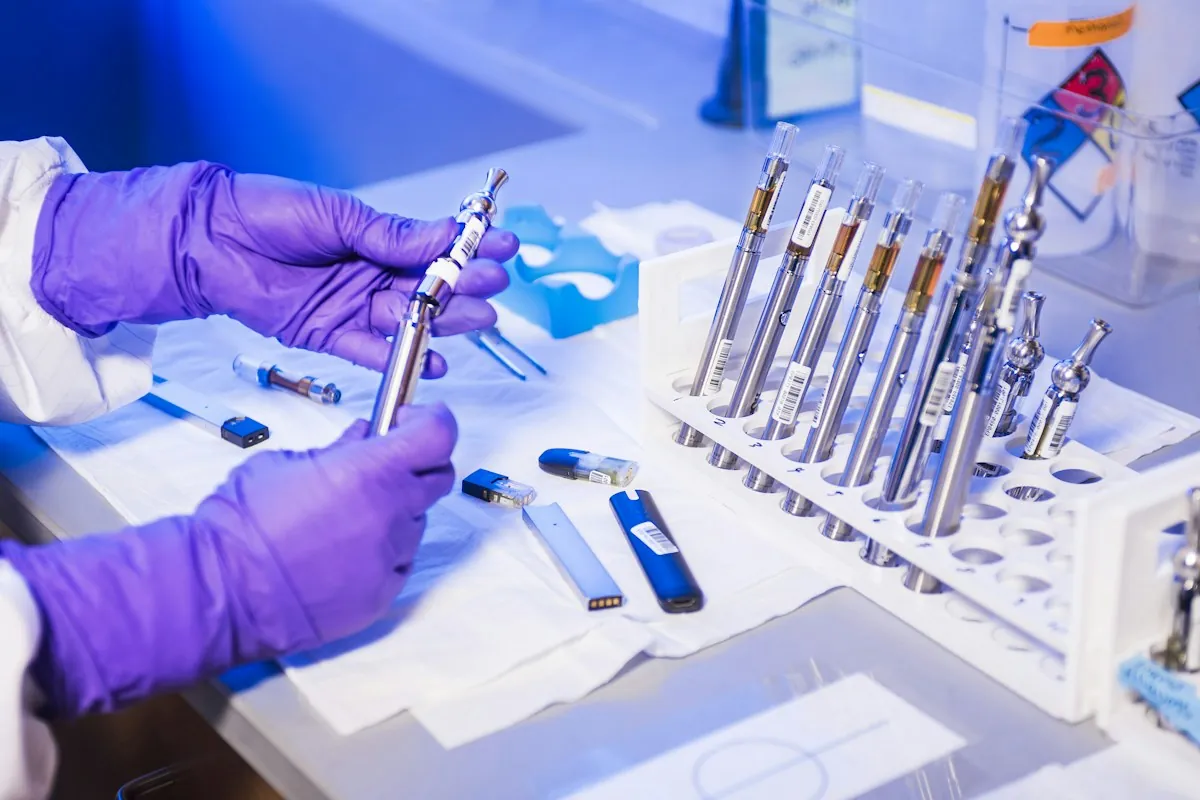
Bulk sample collection to federal minimum counts, chain of custody, and accredited laboratory analysis. This page explains the 3-5-7 rule, homogeneous areas and what a percentage result actually means.
Asbestos sample testing means cutting small pieces of suspect building material, sealing them, and having an accredited laboratory determine what percentage of each piece is asbestos. The number of samples is not a matter of preference. Federal rule 40 CFR 763.86 sets minimum counts per homogeneous area, and those minimums, three, five or seven for surfacing material, are what make the result defensible rather than anecdotal.
Two things decide whether a sample plan is any good: whether the homogeneous areas were drawn correctly, and whether the minimum counts were met in each one. Everything else, the laboratory method, the turnaround time, the format of the report, is downstream of those two decisions.
A single negative sample proves one spot was negative. It does not clear a ceiling, a floor or a building. Asbestos was never mixed evenly through hand-applied batch products, which is the entire reason the federal minimums exist.
Federal rule 40 CFR 763.86(a) requires an accredited inspector to collect bulk samples from each homogeneous area of friable surfacing material in a statistically random manner that is representative of the homogeneous area, in the following minimum counts.
| Homogeneous area size | Minimum samples |
|---|---|
| 1,000 square feet or less | 3 |
| Over 1,000 and up to 5,000 square feet | 5 |
| Over 5,000 square feet | 7 |
Surfacing material means anything sprayed, troweled or otherwise applied to a surface: ceiling texture, acoustic plaster, decorative wall finish, fireproofing. In a Bismarck home the surfacing material in question is almost always a textured or popcorn ceiling.
Subsection (b) covers thermal system insulation, meaning pipe wrap, boiler insulation and duct insulation. At least three samples from each homogeneous area. At least one sample from each patched section under six linear or square feet. Samples from each insulated mechanical system where cement or plaster is used on tees, elbows or valves. Importantly, no samples are required where the inspector determines the insulation is fibreglass, foam glass, rubber or another material that is not asbestos-containing building material. That exemption is why a competent inspector does not blindly sample every pipe in a basement.
Subsections (c) and (d) cover miscellaneous friable material, such as floor tile, and nonfriable suspect material, such as cement siding. Both must be sampled in a manner sufficient to determine whether the material is asbestos-containing or not. There is no fixed count, because the right number depends on how many distinct products are present rather than how much floor area they cover.
A homogeneous area is a set of surfaces uniform in colour, texture and date of application. The practical question an inspector is answering is: did this all come out of the same bucket. If yes, it is one homogeneous area and the 3-5-7 counts apply to it as a unit. If no, it is two areas and each one needs its own minimum count.
Bismarck housing makes this real in a specific way. A 1962 ranch that got a basement finish in 1978 and a three-season porch in 1991 has three distinct construction eras under one roof. The 1962 and 1978 work both predate the phase-down and both need sampling. The 1991 porch almost certainly does not. Drawing that boundary wrong in either direction costs you money or costs you the answer.
Collection is done wet. The material is misted before cutting so any fibres that loosen are bound in water rather than airborne, and the sample goes straight into a sealed, labelled container. Each container is logged against an exact location, room, surface and position, so a result can be traced back to a physical place in the building rather than a vague description.
Sample size is small, generally the footprint of a coin, and the spot is patched before we leave. On a textured ceiling the patch is visible on close inspection until repainted. On flooring, samples are taken at an edge or inside a closet wherever the layout allows.
This is the step the EPA specifically warns homeowners away from performing themselves. Its guidance is that a trained and accredited asbestos professional should take samples for analysis, and that if done incorrectly, sampling can be more hazardous than leaving the material alone. The hazard is not in the material sitting there. It is in the act of breaking into it.
Bulk samples are analysed by polarised light microscopy. The microscopist prepares a portion of each sample and identifies asbestos by a combination of optical properties: refractive index, sign of elongation, extinction angle and birefringence. That combination separates the regulated asbestos minerals, chrysotile, amosite and crocidolite among them, from the fibreglass, cellulose and mineral wool that are visually indistinguishable at ordinary magnification.
The output is a percentage per sample. One percent is the federal line. Above it, the material is asbestos-containing and different handling, notification and disposal rules attach to it. Below it, the material is not asbestos-containing, though a trace detection is still reported because it tells you the batch was not clean.
Air sampling is a separate method used after abatement rather than before. Phase contrast microscopy counts fibres per cubic centimetre of air inside a containment to confirm the space is fit to reoccupy. PCM does not identify what the fibres are, only how many there are, which is why it is a clearance tool and not an identification tool.
Laboratory analysis runs roughly $25 to $75 per sample in the Bismarck area, on top of a survey fee of $200 to $800 depending on property size. Because the counts are set by rule rather than by preference, the sample total is largely predictable once the homogeneous areas are known.
A single popcorn ceiling under 1,000 square feet is three samples. A kitchen remodel involving flooring, adhesive, joint compound and ceiling texture is four homogeneous areas and typically nine to twelve samples. A whole-home pre-demolition survey commonly lands between 12 and 25. Anyone quoting a whole-house survey on three samples is not following the federal minimums.
The full cost page breaks the survey fee and the per-sample fee apart, and the main testing page covers the whole service end to end.
The primary text for the 3-5-7 minimum counts on surfacing material and the separate requirements for thermal system insulation, miscellaneous material and nonfriable suspect material.
EPA guidance on why homeowners should not collect their own samples and when testing is and is not necessary.
State inspector certification requirements and the pre-renovation and pre-demolition inspection rule that sampling satisfies.
The 3-5-7 rule is the minimum number of bulk samples an inspector must collect from a homogeneous area of surfacing material, set by federal rule 40 CFR 763.86. At least three samples for an area of 1,000 square feet or less, at least five for an area over 1,000 and up to 5,000 square feet, and at least seven for an area larger than 5,000 square feet. The samples must be collected in a statistically random manner representative of the whole area.
Because asbestos was never mixed evenly through the materials it went into. Sprayed ceiling texture, joint compound and plaster were batch products applied by hand, so fibre content varies across a single room. A single negative sample tells you that one spot was negative. The federal minimums of three, five and seven exist precisely to reduce the chance that a sampling pattern misses the asbestos that is present.
A homogeneous area is a group of building surfaces that are uniform in colour, texture and installation date, which means they almost certainly came from the same product batch. The ceiling texture in a 1968 living room and the texture in a 1984 addition are two homogeneous areas even if they look alike. Sample counts apply per homogeneous area, so defining these boundaries correctly is what determines whether a survey is valid.
At least three samples from each homogeneous area of thermal system insulation, plus at least one sample from each patched section under six linear or square feet, plus samples from each insulated mechanical system where cement or plaster is used on tees, elbows or valves. No samples are required where the inspector determines the insulation is fibreglass, foam glass, rubber or another material that is not asbestos-containing building material.
The EPA does not recommend it. Its published guidance says a trained and accredited asbestos professional should take samples for analysis, because if done incorrectly, sampling can be more hazardous than leaving the material alone. Breaking into a suspect material is the exact action that releases fibres. Mail-in kits put the riskiest part of the process in untrained hands, and they produce no documented sample plan that a contractor or the state will accept.
Two to three business days is standard turnaround from the laboratory. Rush analysis at 24 hours or same day is available at a premium when a demolition crew is scheduled. Air clearance samples usually turn around faster because phase contrast microscopy is a simpler count than the full optical identification that bulk samples require.
Each sample gets a percentage. Polarised light microscopy identifies asbestos by refractive index, sign of elongation, extinction angle and birefringence, which separates chrysotile, amosite and crocidolite from each other and from fibreglass, cellulose and mineral wool. Above one percent, the material is asbestos-containing under federal definitions. Below one percent it is not, though a trace detection is still reported.
The sampled spot is a small cut, typically the size of a coin, and it gets patched before the inspector leaves. Sampling is done wet to suppress fibre release at the moment of collection. On a textured ceiling the patch is visible on close inspection until it is repainted. On floor tile the sample is usually taken at an edge or in a closet where the cut is out of sight.
Send us the age of the building and the materials in scope. We come back with the homogeneous areas, the sample count and a fixed price, in writing.