Textured and popcorn ceilings
Sprayed ceiling texture was one of the most widely used asbestos surfacing materials in North Dakota housing. It is the single most common thing we are asked to sample, usually right before someone plans to scrape it.
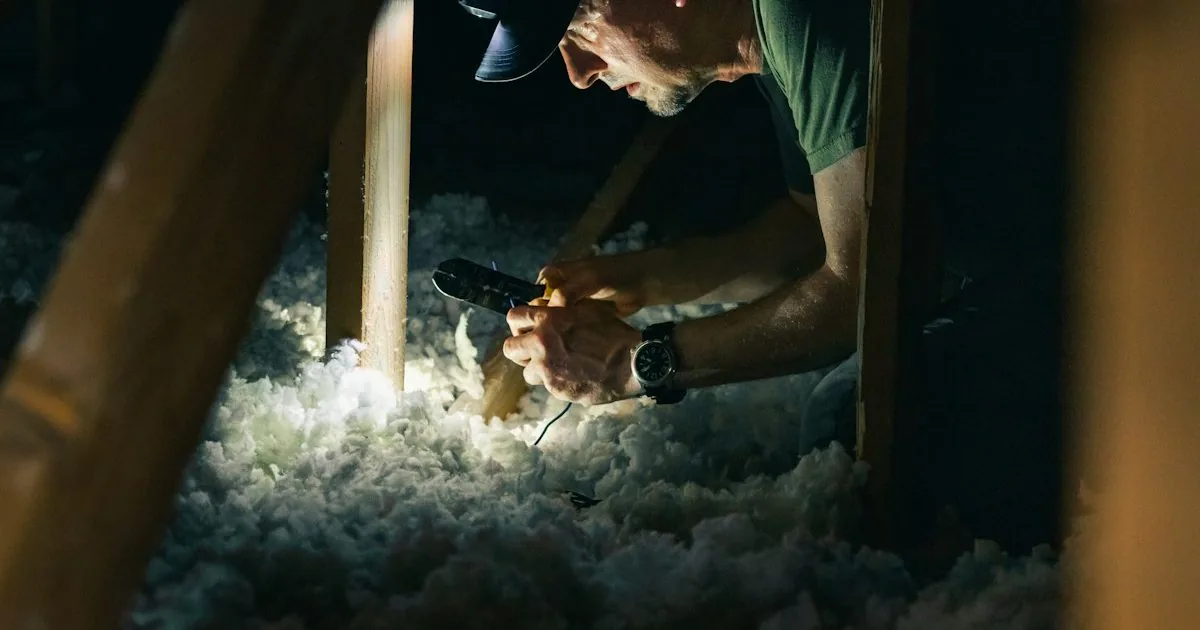
Bulk sampling, accredited laboratory analysis and written reports for homes, rentals and commercial buildings across Bismarck and Burleigh County. We test and document. We do not sell removal, so the result is the result.
Asbestos testing answers one question: does this specific material contain asbestos, and at what percentage. Everything else follows from that answer. A certified inspector identifies the suspect materials on site, collects bulk samples under the counts federal rule 40 CFR 763.86 requires, and sends them to an accredited laboratory for polarised light microscopy. You get a written report in two to three business days naming each material, its asbestos content and its fibre type.
That report is the thing a demolition contractor, an abatement crew, a lender or the state will actually ask for. A verbal opinion from someone standing in your basement is not. In Bismarck the usual reasons people call are a remodel that involves scraping a textured ceiling, a house sale where the inspection flagged pipe wrap, a rental turnover with damaged floor tile, or a demolition that cannot be scheduled until the pre-demolition survey is on file.
North Dakota DEQ requires that all affected parts of a facility being renovated or demolished be inspected by a state-certified inspector for asbestos-containing materials before the project begins. The SFN 17987 notification is due at least 10 days before any demolition, whether or not asbestos is present.
Building age does most of the predicting. US asbestos use in construction products was phased down through the late 1970s and into the early 1980s, so anything built or remodelled before roughly 1980 is worth treating as suspect. Bismarck has a lot of that housing. The Cathedral Area Historic District, the neighbourhood locals call The Hill, was listed on the National Register in May 1980, and its contributing buildings are Bungalow, Craftsman, Colonial Revival and Tudor Revival homes that all predate the phase-down by decades. The same logic applies to mid-century ranch stock across Burleigh and Morton counties.
We are a testing and sampling operation, not an abatement contractor. That separation matters more than it sounds. When the party who finds the asbestos is the same party quoting you to remove it, the incentive runs the wrong way. Our report says what the laboratory found and nothing more. Asbestos testing in Bismarck, ND covers the full service in detail.
Eight categories account for the overwhelming majority of positive results in North Dakota residential and light commercial buildings. The EPA lists the same categories nationally, and none of them look dangerous. That is the whole problem with asbestos identification by eye.
Most residential jobs are done on site inside an hour and reported within three business days. The sequence below is the same whether we are sampling one ceiling or surveying an entire building ahead of demolition. Only the sample count and the time on site change.
Tell us the age of the building, what you plan to disturb and your timeline. A single popcorn ceiling is a different job from a pre-demolition survey, and the scope sets the price before anyone drives out.
A certified inspector walks the affected areas and maps homogeneous areas, meaning surfaces installed at the same time from the same product. Miss a homogeneous area and you miss the material it hides.
Samples are cut using wet methods into sealed containers, following the minimum counts in 40 CFR 763.86. Each sampled spot gets patched. Nothing is left open and nothing is left dusty.
Samples go to an accredited laboratory for polarised light microscopy. PLM identifies which of the six regulated asbestos minerals is present and reports its concentration as a percentage.
You get a report naming every material, its asbestos content by percent, the fibre type, and a plain summary of what is regulated. It is the document a contractor or the state will ask to see.
If an abatement contractor removes material, air sampling inside the containment is read by phase contrast microscopy to confirm fibre counts are low enough to reoccupy the space.
Bulk samples are analysed by polarised light microscopy, usually shortened to PLM. A microscopist mounts a prepared portion of the material, examines it under polarised light and identifies asbestos by its optical properties: refractive index, sign of elongation, extinction angle and birefringence. Those properties separate chrysotile from amosite from crocidolite, and separate all three from the fibreglass, cellulose and mineral wool that look similar to a naked eye.
The report comes back as a percentage per material. Above one percent, the material is asbestos-containing under federal definitions and different handling rules apply. Air samples taken after an abatement job are a different method entirely, phase contrast microscopy, which counts fibres per cubic centimetre of air rather than identifying what they are.
How bulk sample testing and the 3-5-7 rule work goes through sample counts, homogeneous areas and turnaround times in full.

A residential survey in the Bismarck area generally runs $200 to $800 depending on property size, with laboratory analysis at roughly $25 to $75 per sample. Those figures come from published Bismarck-local pricing and sit inside the national band, where the typical inspection lands near $485. Clearance testing after abatement is a separate service.
| Service | Typical Bismarck range |
|---|---|
| Asbestos inspection or survey | $200 to $800 by property size |
| Laboratory analysis, per sample | $25 to $75 |
| Post-abatement clearance testing | $400 to $1,000 |
| Single material check, one ceiling or one floor | Bottom of the survey range plus per-sample lab fee |
The full Bismarck asbestos testing cost breakdown sets out what drives each figure, how sample counts change the total, and what the downstream abatement numbers look like if a result comes back positive.
For an intact material you are leaving alone, testing is a choice. For a demolition or a large renovation in North Dakota, it is a requirement. DEQ runs the state Asbestos Control Program and requires inspection by a state-certified inspector before renovation or demolition begins. The SFN 17987 Notification of Demolition and Renovation goes in at least 10 days before demolition, whether or not asbestos is present.
For renovations, the 10-day notification is triggered by quantity: more than 160 square feet of asbestos-containing surfacing material, or more than 260 linear feet of asbestos-containing thermal system insulation. Those numbers come from the federal NESHAP rule, 40 CFR 61.145, which also sets a 35 cubic foot threshold for material off facility components where length and area cannot be measured.
Contractors who skip the survey discover the problem the worst possible way, mid-demolition, with a stop-work order and a waste stream that has just become a regulated one. Demolition permits and asbestos rules in Burleigh County walks through the paperwork in order.
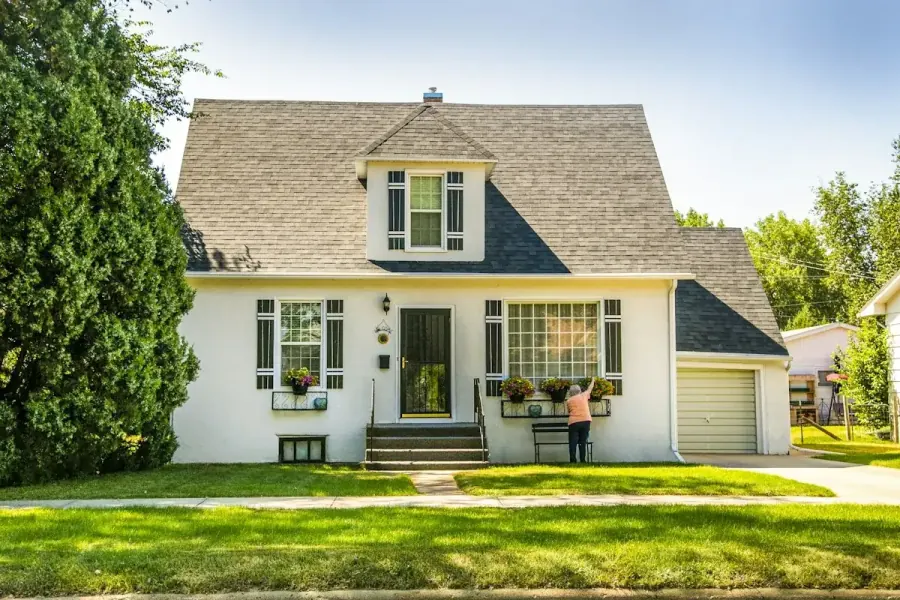
We cover Bismarck, Mandan, Lincoln and the surrounding communities in Burleigh and Morton counties. Most of the work is residential, but the same sampling protocol applies to rentals, small commercial buildings, churches, schools and farm outbuildings.
A residential asbestos survey in the Bismarck area generally runs $200 to $800 depending on the size of the property, with laboratory analysis billed at roughly $25 to $75 per sample. Post-abatement clearance testing is a separate service, usually $400 to $1,000. A single-material check, say one popcorn ceiling, sits at the bottom of that range. A whole-house survey on a larger pre-1980 home sits near the top.
The EPA does not recommend it. Its guidance is explicit that a trained and accredited asbestos professional should take samples for analysis, because if done incorrectly, sampling can be more hazardous than leaving the material alone. Breaking into a material to grab a piece of it is the exact action that releases fibres. Mail-in kits exist, but they put the riskiest part of the job, the collection, in untrained hands and they produce no report that a contractor or the state will accept.
The 3-5-7 rule is the minimum sample count for surfacing material set by federal regulation 40 CFR 763.86. An inspector must collect at least three samples from a homogeneous area of 1,000 square feet or less, at least five from an area over 1,000 and up to 5,000 square feet, and at least seven from an area larger than 5,000 square feet. Thermal system insulation has its own rule, at least three samples per homogeneous area. The counts exist because asbestos is not mixed evenly through a material, so one sample can miss it.
Asbestos-containing material that is intact, undamaged and will not be disturbed is generally safer left alone than removed. The EPA states plainly that if building materials in your home are not damaged and will not be disturbed, you do not need to have your home tested. The risk comes from fibre release, and fibres release when material is cut, sanded, drilled, scraped, torn or demolished. That said, above a certain quantity in a renovation, federal rules stop treating it as a judgement call and start requiring notification and controlled removal.
For a typical single-room remodel in Bismarck, expect $200 to $400 for a targeted survey covering the materials you plan to disturb, plus $25 to $75 per sample for lab work. A kitchen or bath gut usually means three to six samples: flooring, the adhesive under it, joint compound, and any textured ceiling. That is a small line item against a remodel budget, and it is the only way to know whether the demolition you are about to pay for triggers state notification requirements.
No, asbestos and mold are unrelated hazards with different causes, different health effects and different test methods. Asbestos is a mineral fibre that was manufactured into building products. Mold is a living organism that grows where there is moisture. They get tested together because both tend to turn up in the same places, older basements, crawl spaces and around aging mechanical systems, and because a buyer or renovator generally wants both answers before committing to a project.
They cause different kinds of harm on different timescales, so the honest answer depends on the exposure. Asbestos risk is long-latency, exposure today can lead to lung disease decades later, and there is no treatment that reverses it. Mold exposure causes more immediate effects, respiratory irritation, aggravated asthma and allergic response, and those effects usually improve once the moisture source and the growth are removed. Mold is more often the more urgent problem in a home you live in right now. Asbestos is more often the more serious problem in a building you are about to demolish or renovate.
Tell us the age of the property and what you plan to disturb. We reply within one business day with a written price and a sample plan, not a sales call.